
Blog
Revisiting the Article That Sent Shockwaves Throughout the Substance Use Disorder Profession
By Mark Sanders and Bill Stauffer
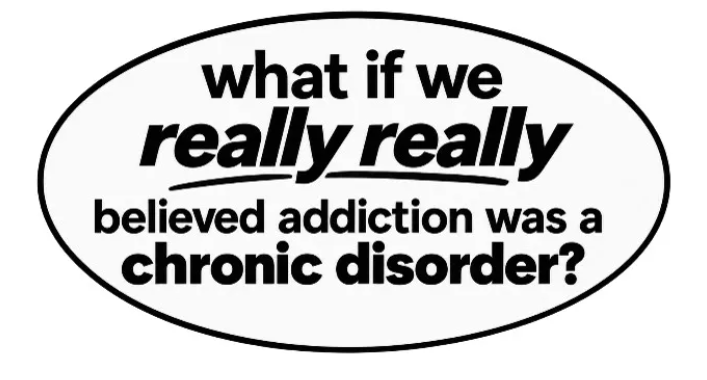
In 2005 historian William White, MA published an article in the Great Lakes ATTC Bulletin titled, Recovery Management: What if we Really Believed Addiction was a Chronic Disorder? The article captured the profession’s attention and imagination as it challenged how we were currently doing business at that time (the Acute Care Model) and paved the way for the profession to think about how recovery outcomes would be different if we truly believed addiction was a chronic and progressive illness if we shifted from the acute care model solely towards a recovery-oriented system of care. White wrote:
Severe and persistent AOD problems have been collectively depicted as a “chronic, progressive disease” for more than 200 years, but their historical treatment more closely resembles interventions into acute health conditions (e.g., traumatic injuries, bacterial infections). More closely resembling emergency room visits in comparison to how we treat chronic and progressive conditions like cancer and diabetes.
In the article White advocated for a recovery-oriented approach as he mentioned some of the limitations of the Acute Care Model, including:
- Failure to Attract. Less than 10% of individuals with SUD seek treatment per year and most of those admitted arrive under coercive influences.
- Failure to Engage/Retain. Half of those admitted to treatment do not complete it and 18% of those admitted are administratively discharged.
- Inadequate Service Dose. The majority of individuals admitted for acute care treatment do not receive NIDA’s recommended optimal dosage of treatment (90 days of continuous support post discharge).
- Lack of Continuing Care. Only one in five clients receive continuing care following acute care treatment, in comparison with clients with cancer who are monitored for 5 years or individuals with diabetes who may be monitored for life.
Recovery Outcomes. We know more than we did in 2005. In respect to White’s point on service dose, a study examining the NIDA principles of recovery in 2013 found that “clients (who) participated in treatment 12 weeks or more had virtually the same drug use outcomes as those with participation of less than 12 weeks.” For services to have any impact at all, treatment and recovery support must extend to a minimum of 90 days. Even as we write this, most people in our nation do not get the minimum effective dose of care. We do not even know the number of who get the minimum effective dose of treatment. The U.S. addiction treatment system does not routinely ensure that everyone who enters treatment receives a minimum of 90 days of care, nor does it routinely follow everyone after discharge from acute or residential treatment to determine longer-term outcomes. The closest thing we have is the TEDS data set, but it only accounts for public funding. That data set averages around one in three getting the minimum amount of effective treatment by the measure of duration. For any condition we took seriously, knowing this number so we could remain focused on changing the outcome would be a fundamental measure.
The majority of individuals leaving acute care treatment return to drug use within the first year of leaving treatment, most occurring within the first 90 days of discharge. This leads to the revolving door syndrome, providing expensive care at the front end without bothering to assure long term outcomes through engagement after they leave an episode of care. We even at times see that those administrative discharges can occur when the needs of the people served are not matched with the capacity or design of the service setting. This can occur all too often when insurance providers ration and delay care. All of this increases the stigma of addiction, and the belief that treatment does not work! History reveals that this leads to more punitive measures to address substance use disorder. The year that White wrote the article, the prison population was 2.5 million, disproportionately individuals with AOD challenges. A lesson we should learn is that we cannot incarcerate our way out of having a pervasive addiction challenge in America. Yet if we fail to build a more comprehensive, longer term recovery model that delivers results, history shows us that simply locking people up seems to be the all too common politically expedient outcome.
This was a dramatic increase from the estimated 400,000 incarcerated in 1985. It reflects how from a policy perspective we as a society saw addiction as a lack of morality or a character flaw to punish rather than a condition to assist people in resolving. White’s call to shift the field towards a recovery-oriented system of care was Revolutionary! The article preceded his trailblazing recovery-oriented systems of care Monograph series.
In this post we will revisit White’s 2005 groundbreaking article and provide commentary on how we are doing as a profession today as it pertains to the vision captured in the article. Today, the addictions profession is a Tale of Two Cities in a land that has not made the fundamental shifts that would transform our care system. Some programs and some geographical regions have clearly shifted from the acute care model towards a recovery-oriented system of care anchored in the natural environment. This is evident by the dramatic increase in Recovery Community Organizations (RCO’s) nationwide, which are navigating our patchwork funding system grant to grant to strengthen recovery communities. The increase in recovery coaches providing ongoing, pre-treatment, in-treatment and post-treatment recovery support, ongoing, anchored in the natural environment, long-term recovery check-up, efforts to measure increases in recovery capital over time and the innovation of Recovery Cities as discussed by Dr. David Best.
Other programs and regions are continuing to do business as usual with a continued use of the acute care model solely, for numerous reasons:
- Some programs and systems of care “didn’t receive the memo!” They have been so busy with assessments, admissions, withdrawal management, acute care services, treatment planning and discharge planning that they are unaware that a recovery-oriented systems of care revolution is occurring around them. Some programs have no recovery coaches on staff, are unaware of RCO’s in their community and have never heard of recovery cities.
- Insurance reimbursement favors acute care treatment. Few Americans even have insurance plans that cover the minimum level of effective care in respect to duration of services. These systems aggressively meter out those services like we must use them sparingly even as the costs to society for failing to do so are immense. This becomes a cost shift to our public funding mechanisms as the acute interventions fail and insurance coverage is lost for the person who is addicted.
- State funding. Acute care programs continue to be funded by states whereas recovery-oriented programs and recovery community organizations are far too often considered specialty programs.
- Our documented outcomes are nearly always measured by treatment completion rather than longer term recovery outcomes focused on global improvement in health and functioning that are durable over time.
- Limited follow up. Many if not the vast majority of systems of care and related programs continue to treat “aftercare as an afterthought.” They are unaware of the need for continuous care anchored in the natural environment. As a system we even lack the focus in our framing of post-acute treatment care and support. Consider oncology treatment. When a person gets a tumor removed or completes chemo, we do not think of the stages of care beyond those acute steps as “extra” we understand that achieving sustained remission is a multi-step process requiring a series of interventions, services and adherence to a longer-term care plan. The same is true for substance use conditions, particularly in its more severe forms. It is still the case that for our national treatment and recovery support system to routinely do so remains a radical notion two decades after this essay.
- Society still expects a cure or a simple intervention. A quick gold standard tool that resolves everything. Substance use conditions are some of the most complex conditions we face, and their resolution is equally complex and multifaceted. Much of the general public is still unaware of the ebb and flow between treatment and a return of symptoms, sometimes repeatedly over years before there is sustained recovery.
- Treatment is viewed as separate from recovery. Some programs still view treatment as separate from recovery. We know that long term recovery is sustained in community, yet our focus far too often remains on the acute front end clinical interventions. To effectively shift to addressing addiction as a chronic disorder, we must make the connection to community.
- Greed as a pure profit motive. There are a small percentage of expensive high-end acute care programs that are too busy making money off of acute care residential treatment that they ignore all the evidence behind the need for longer term recovery management. These programs might fly clients into treatment on exotic islands or on both coasts overlooking the ocean. They might have a 5-star chef who serves dishes such as caviar and sushi and include spa treatment. Then, after 28 days, send clients home upon graduation with limited continuous care. Click here to continue reading.
Giftedness and Education: A Brief Introduction for Therapists, School Social Workers and Counselors
By Elton Sanders, BS
September 8, 2026

This is the second post in a series
As stated previously, gifted students have unique challenges that must be met with unique solutions. There are many issues gifted students face in schools, as well as many potential solutions to them. This post is meant to be an introduction for therapists, school social workers and counselors.
Gifted education in the U.S is not standardized, so policies for how gifted education is run vary by state and school district. Individual schools can have their own practices as well. It is important to check all policies that apply to the school the student attends.
Schools with gifted programs often fail to give these services to gifted students, who go unnoticed. As mentioned previously, giftedness is very misunderstood. Most people in the education system have received little training on giftedness—their perceptions of it are based on the popular image of giftedness as high intelligence with no issues.
Referring students for testing or assessment is important. While gifted testing and assessment are often used interchangeably, they are two separate things. Gifted testing refers to tests that are standardized; the same test is given to every recipient. Gifted assessment is a much more in-depth process and gives a more complete view of the child’s profile. It can use many techniques, including multiple tests, interviews with family members, and classroom observation.
While schools can provide free evaluation, it is often worth it to seek additional evaluation outside the school. .This gives the option of other opinions in the evaluation process.
According to the Individuals with Disabilities Education Act (IDEA), all students must obtain an IEP (Individualized Education Program) to receive special education. To get an IEP, the student must be evaluated and found to have a disability that adversely affects school performance.
(The use of the word disability when referring to giftedness is controversial, but many gifted students do have differences that adversely affect school performance and can benefit from special education.)
A majority of students with IEPs spend most of their time in general classes; with only some of their time spent in special classes and resource rooms. The first IEP meeting is held shortly after the student is found eligible for special education. This meeting will discuss the needs of the student and what the IEP should include to fulfill these needs.
Future meetings will be at least once a year and will focus on the student’s progress. The IEP should be updated to adjust to the student’s changing needs and prepare them for their goals after graduation.
An IEP team consisting of the following people is required to attend every meeting:
A parent or guardian of the student
At least one of the student’s general education teachers
At least one of the student’s special education teachers
A school district representative who has the power to approve services and resources
An expert (typically a school psychologist) who can interpret the student’s evaluation results
A translator or interpreter (if needed)
Schools often suggest IEPs that do not meet the needs of the student. When this happens, it is essential to advocate for the student. Students do not have to agree to plans that do not support them. They and their team are allowed to state their needs, request changes to the IEP, and request additional meetings.
In egregious cases, the family can bring in an advocate, work with an advocacy organization, or seek legal advice.
The student and their family can also bring other people to the meeting, including friends, family members, and experts, including the student's therapist. They can provide additional context for student’s experiences, provide expertise, and give emotional support.
In addition to in-school services, there are a variety of other schooling options that should be considered. These include online school, homeschooling, and specialized schools if deemed more appropriate to meet the student’s needs. While traditional brick and mortar schooling works for some people, it is not the best option for everyone, especially many gifted students.
RESOURCES
https://adayinourshoes.com/printable-list-of-strategies-sdis-for-your-iep-meeting/
Lindsay, R., Rossi, E. B., Smith, B. C., Abaza, N., Renzulli, S., & Burke, M. M. (2026). Exploring the Experiences of Twice-Exceptional Youth With Section 504 Plans in School. Gifted Child Quarterly, 70(2), 139-151. https://journals.sagepub.com/doi/10.1177/00169862251378118
https://www.understood.org/en/articles/the-iep-meeting-an-overview
https://www.understood.org/en/podcasts/understood-explains-ieps/ieps-resolving-iep-disputes
https://www.davidsongifted.org/prospective-families/gifted-testing-and-assessment/
Giftedness: A Brief Introduction
By Elton Sanders, BS
August 26, 2026

Many times, gifted children in schools are often referred to therapists because they are often misunderstood. They are frequently misdiagnosed and not identified gifted. Most teachers receive little to no training on how to work with gifted children. Many therapists overlook the subject of giftedness because it is not in the DSM-5, although it has been deeply studied. This post is meant to be an introduction for therapists, school social workers and counselors.
Intellectual giftedness is commonly understood as above-average intelligence, especially in children. But the name is somewhat misleading, as many experts in the field claim that giftedness is mainly about asynchronous development—by which gifted people experience accelerated development in some areas while being average or underdeveloped in others.
There is great variation within the label giftedness; no two gifted people are the same. It is believed to be caused by differences in the brain, as gifted people have visible differences in brain physiology compared to neurotypicals. These include increased connectivity and enlarged volume in certain regions, including the frontal lobe and temporal lobe.
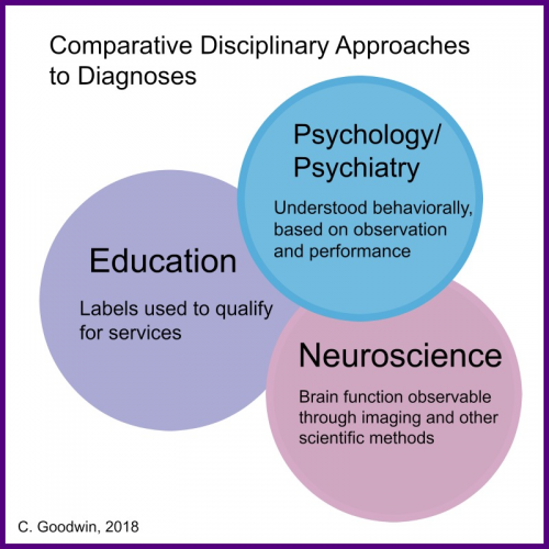
Some characteristics of gifted people include, but are not limited to:
Faster processing of information
Creativity and problem-solving ability
Intense interests in specific areas
Non-linear reasoning
High vocabulary
High sensory sensitivity
Emotional intensity
Strong and early developed sense of justice and morality (I.E. justice sensitivity)
Early developed (and sometimes unusual) sense of humor
Asynchronous development leads to unique challenges which, contrary to popular belief, often persist long into adulthood, though intelligence can lead to these issues going unnoticed.
For example, a gifted person may be highly intelligent but have a slower than average processing speed, causing them to struggle during timed tests. This can lead to an average IQ, leading to the giftedness not being diagnosed.
The individual may understand the material beyond others at their age, but without accommodations (such as increased test taking time) they may not be able to demonstrate their skills. Normative practices are often ineffective and harmful when working with non-normative groups such as gifted people.
Gifted programs in schools typically offer more advanced work than usual for the grade. This can be very helpful for gifted students who are bored by general classes that do not challenge their abilities. However, students may still struggle with the work in these classes, and many educators do not understand giftedness, even those who work in gifted programs.
Many gifted students are instead placed in Special Ed classes. Special Ed placement They can help with some of the challenges associated with giftedness, but many Special Ed classes are not prepared to handle the increased intellectual needs of gifted students. These two options leave many gifted students in a lose-lose situation.
Some gifted individuals are twice-exceptional, or 2e. The term 2e refers to people who have the unique cognitive profile of being gifted and having a learning or developmental disability, such as dyslexia, autism, or ADHD. Asynchrony is even more prevalent in 2e people, and they require a specialized plan to meet their needs.
When evaluating clients, it is important to consider giftedness as a possibility in addition to other forms of neurodivergence. When an individual shows signs of giftedness, consider referring them for a gifted evaluation to a tester who understands or specializes in giftedness.
Because gifted people have varied profiles with extreme strengths and vulnerabilities, professional assessment can be very useful to help them understand themselves and receive help. Testing can reveal a person’s strengths, how their profile has changed throughout their life, and what skills they need to improve to thrive.
RESOURCES
https://gro-gifted.org/the-neuroscience-of-giftedness/
https://www.davidsongifted.org/
https://cagifted.org/wp-content/uploads/2020/05/Characteristics-of-Gifted-Children.pdf
Therapeutic Filmmaking as an Intervention for Substance Use Disorder
by
Elton Sanders, BS
August 18, 2026
Military service is uniquely traumatic in a variety of ways, yet over half of veterans do not receive mental health treatment (Anderson, 2021). People are often deployed for over a year, during which they are separated from their home and support systems. Reintegration after service comes with many difficulties, including reconnecting with loved ones, finding a job, and potential physical and mental health conditions.
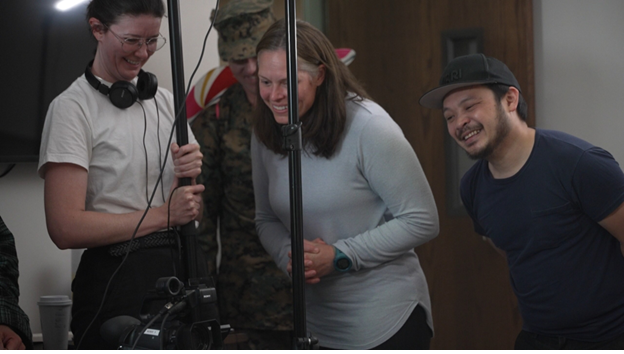
The I Was There (IWT) film workshop is an intervention model created by Benjamin Patton that uses a filmmaking workshop to help veterans cope with trauma and reintegration. It has achieved an attrition rate of only 5%. The program has several sessions led by a mental health provider and a team of professional filmmakers. However, most of the creative freedom is given to the group.
Therapeutic filmmaking is an approach to arts therapy that brings groups of people together to create films. Clients are involved in several aspects of the filmmaking process, including writing, filming, acting, directing, and editing. Through collaboration, participants gain useful skills, connect with others with similar experiences, and create art that expresses difficulties faced by the group. Members do not need filmmaking experience—everyone is taught basic camera skills on the first day. In later sessions, the workshop breaks into groups of 3-4 people. Each group chooses a theme important to all members to create a film. The films are written, acted, shot, and edited over the next few days. Finally, the films are screened before the entire workshop and invited guests.
A major appeal of the workshop is that it grants clients agency—they can choose who they work with, their role in the production, and how much or little they share about their trauma. This agency separates it from other models that believe full exposure of trauma is necessary and do not grant clients this level of agency. Beth, who was a service member during 9/11 chose not to work with a group of female 9/11 veterans creating a film about the attack. She chose to work with a group covering a different subject; this choice helped her open up about her trauma for the first time in 16 years. She said after the workshop;
“I came to work, to get away from the girls who were in 9/11. I didn’t want to go there. I wanted to work with somebody, that it could be in there, but on a positive level. I didn’t want to relive the whole day, which was what the other girls were doing. So I joined someone who had a totally different idea, but putting my input somewhere there, that would be more effective for me. And it was.
I think a lot of people can benefit from it. Because I am very stubborn and I’m very close-minded to this whole idea of going back, and re-living any kind of grief. I don’t go there. I don’t touch it. It’s like taboo for me. So for you guys, to be able to help me with it, I think you can help a lot of other people. And I watched my film over and over, and I don’t have a problem with that.”
Jonathan a veteran and I Was There workshop participant, said
"You can’t have someone with PTSD just sit down and talk openly about his problems, with insight and understanding. No. It’s chaos. You need the art. You need the distance. You need the music, the puppets, so that you can project yourself onto the character, or the puppet."
The workshop is a form of group therapy, which is preferred by many veterans. Many participants felt other group members could understand them, as they had been through similar experiences. Filmmaking is very effective for treating trauma because it is multisensory, incorporating sight and sound. Traumatic memories are vivid and multisensorial. Many find that film can convey their traumatic experiences that cannot be expressed through words.
Filmmaking workshops could be useful as an intervention for substance use disorder. They face some of the same challenges as veterans, including substance use, trauma, and difficulties with reintegration. In addition, substance use is also multisensory and difficult to express with words.
Tag words: Veterans, Therapeutic Filmmaking, Substance use disorder, Trauma,
REFERENCES
Cohen, J. L., Johnson, J. L., & Orr, P. (Eds.). (2015). Video and filmmaking as psychotherapy: Research and Practice (1st ed.). Routledge, Taylor and Francis Group.
Drebing, C. E., Mamon, D., Calixte, R. M., et al. (2023). Pilot outcomes of a filmmaking intervention designed to enhance treatment entry and social reintegration of veterans. Psychological Services, 20(3), 585–595. https://doi.org/10.1037/ser0000618
Erin Anderson. “Untreated Mental Illness Among Veterans in the United States.” Ballard Brief. November 2021. www.ballardbrief.org
Robertson , B. (2016, March 31). All things connect: The Integration of Mindfulness, Cinema and Psychotherapy. Counseling Today. https://web.archive.org/web/20160928013931/https://ct.counseling.org/2016/03/all-things-connect-the-integration-of-mindfulness-cinema-and-psychotherapy/
Tache-Codreanu, A., David, I., Rotaru, I. A., et al. (2025). Exploring the role of therapeutic filmmaking as an expressive arts intervention in the rehabilitation of adolescents with anxiety or depression: A narrative review. Balneo and PRM Research Journal, 16(Vol 16 No. 3), 851. https://doi.org/10.12680/balneo.2025.851
Tuval-Mashiach R, Patton BW and Drebing C (2018) “When You Make a Movie, and You See Your Story There, You Can Hold It”: Qualitative Exploration of Collaborative Filmmaking as a Therapeutic Tool for Veterans. Front. Psychol. 9:1954. doi.org/10.3389/fpsyg.2018.01954
Psychodrama as a Potential Treatment for Substance Use Disorder
by
Elton Sanders, BS
August 4, 2026

In preparing this post I spoke to Mark Sanders, LCSW, and asked him when he first became aware of psychodrama. Here is his response:
“In 1983 I was a graduate student in an inpatient residential addiction treatment facility. A client volunteered to reenact an event that occurred in his life. He chose a group member to play the role of his younger brother and another group member to play the role of a drug dealer for whom he owed money. In the reenacted scene, the drug dealer came to his house to collect the money, mistook his younger brother for him and shot and killed his brother!”
After the reenactment, the client revealed that he had gone through 6 previous treatments and could never remain abstinent because he believed his addiction caused his brother's death.
The most powerful thing that happened in that group was after his sharing, 6 other group members shared stories believing their addiction caused the death of loved ones. These clients spent the rest of their time in treatment, healing the guilt and shame they discussed that day in the psychodrama group. As a social work student, I was astonished by the impact of psychodrama.
Drama therapy is a form of therapy that allows clients to communicate their experiences by creating art in addition to verbal communication. It allows people to express things that are difficult to express with words alone. The field of drama therapy owes a great deal to psychodrama—a technique created by Romanian American psychiatrist Jacob Moreno in the 1930s. While drama therapy is concerned with all forms of artistic self-expression, psychodrama is specifically focused on the reenactment of real-life relationships, events, and mental processes in people’s lives.
Jacob Moreno was born in 1889 in Bucharest, Romania. While he was in medical school in 1913, he created an early support group for sex workers in Vienna. In 1921 he created the Theater of Sponteniety, an early improvisational troupe that created performances about current events while inviting audience participation. The theater’s first performance was about how Austria should be run after WWI.
Moreno developed techniques at this theater that he would later incorporate into psychodrama. Moreno created psychodrama in the 1930s working with various hospitals in New York.
Psychodrama is based on Moreno’s role theory of society, which says that individuals are defined by the roles they play in relation to other people, other groups, and society as a whole. Every role requires a complimentary role to fulfill its purpose.
Psychodrama sessions take place in groups and last 90-120 minutes. In each session, one participant is chosen as the protagonist while others are chosen as auxiliary egos (people who play others in the protagonist’s life). The rest are in the audience. The sessions are run by a trained psychodramatist known as a director.
The main techniques of psychodrama are doubling, mirroring, soliloquy, and role reversal. In doubling, an auxiliary is selected to play the protagonist’s “inner voice.” They are played by an auxiliary ego, who uses empathic projection to “feel one’s way into the inner world of the protagonist.” (Blatner, 1996; Dayton; Leveton)
Mirroring involves “stepping outside of yourself.” The protagonist selects an auxiliary ego to play themself and reenact an event from their own life. Psychodramatist Zerka Moreno has described mirroring as “becoming your own therapist.” In soliloquy, the protagonist is asked to speak alone to the group about whatever they are thinking or feeling. Role reversal has the protagonist play someone in their own life (i.e. playing one’s own father). It helps the protagonist see themself and other people from a new perspective.
Sessions start with a warmup that promotes spontaneity, preparing the group to play their roles and discover things about themselves. A common warm up is role presentation; each member introduces themselves in the role of something important to them. The role can be anything; a favorite color or artist; a family member, or an aspect of oneself. The director and other group members will sometimes pause to interview the roles. The presenter will then leave their role, hopefully having learned more about it. Psychodrama often requires a team of professionals in addition to the director. Co-therapists and trained auxiliary egos are often brought in for sensitive scenes, such as events in the lives of people with PTSD (Hudgins & Drucker, 1998).
There is a related technique known as sociodrama that is frequently used with groups of people who have experienced collective traumas. In sociodrama, the group picks a theme, and the members create a performance based on their shared connection to that theme. A sociodrama at a 2005 NTTW training had a central role of a person recently infected with HIV. There were other roles relating to this including parents, a girlfriend, and social workers, as well as the strong antagonist role of The Person Who Infected Him (Propper).
Psychodrama started to decline in the 1990s and is not practiced much today. There are several reasons for this. Psychodrama is difficult to conduct; it is intensely vulnerable and requires a group of people, unlike traditional therapy sessions which require only one client. While all forms of psychotherapy carry some level of risk, psychodrama’s reenactment of actual events make it potentially harmful in the hands of an improperly trained director.
Many people did not take psychodrama seriously because of its connection to theatre. Drama therapy was created in the latter half of the 20th century and incorporated many aspects of psychodrama and became a popular alternative to it. In the 2000s, evidence-based practices became central to counseling. The previous factors led to a lack of modern research on psychodrama, further contributing to its decline.
There are many reasons to bring back psychodrama. Today, world events produce group trauma. The Native American Wellbriety Movement and First Nation tribes in Canada are empirically proving that it is possible to recover from trauma and addiction as a group and that the impact of group healing can be felt for generations. Modern research is needed to determine the efficacy of the use of psychodrama. Dr. Irvin Yalom, the father of group psychotherapy, has conducted years of research on the curative factors of groups. In the early phases of a group, including psychodrama, members share stories and learn that they are not alone, they begin to see themselves as connected to peers which facilitates healing. Moreno summarized this with his quote,
A meeting of two: eye to eye, face to face.
And when you are near I will tear your eyes out
and place them instead of mine,
and you will tear my eyes out
and will place them instead of yours,
then I will look at me with mine.
There is a growing awareness that clients do not simply have issues in separate areas of their lives that can be treated independently of each other. Historical and current trauma, dark family secrets, mental illness and substance use disorders can be addressed concurrently in group settings. Psychodrama examines every role in a person’s life, allowing it to treat the entire person.
REFERENCES
Blatner, A. (2000). Foundations of psychodrama: History, theory, and practice, Fourth Edition. Springer Publishing Company. https://blatner.com/adam/blog/?p=3019
https://asgpp.org/wp-content/uploads/2020/02/psychodrama.conciseintro.pdf
https://web.archive.org/web/20180820163147/http://www.asgpp.org/pdf/What%20is%20PD,%20etc.pdf
Tag Words: Psychodrama, sociodrama, Jacob Moreno, substance use disorder, drama therapy
Improv for Clients With Substance Use Disorder
by
Elton Sanders, BS
July 6, 2026

Improv shows have provided many hours of entertainment for those who see them. But improv also has many benefits for those who perform it. It provides comedy and laughter, which has a healing effect. Improvisational theatre has been used to help a number of groups, including people with anxiety, autism, and depression. It has many potential benefits for people with substance use disorder.
Improv can improve social skills, divergent thinking, creativity, uncertainty tolerance, and affective wellbeing. Uncertainty tolerance is especially important for addiction, which is the ability to cope with uncertainties of the future. The unknown is a potential relapse trigger for individuals seeking recovery. Gordon Bermant writes that “Both improv and applied psychology practices aim to increase personal awareness, interpersonal attentiveness, and trust among members of the ensemble.” In improv, a person needs to be very aware of their own choices and actions, as well as those of their partner(s).
This is highlighted by the most important rule in improv; “Yes, and.” It says that you should welcome the new ideas from a partner “Yes,” and build upon them “And,” instead of rejecting them. It is important that you make committed choices—for there are no bad choices in improv. With improv, you learn that you don’t have to be perfect. You get to listen to others and have them listen to you.
Second City offers an improv for anxiety class to help people address their anxiety. It combines a weekly one-hour improv class with a one-hour group CBT session. The improv allows people to express themselves in a safe environment, while CBT helps people unpack their thought processes which increase anxiety both in and outside of the class. Many people who are in or beginning recovery struggle to have social interactions while sober. Improv classes can prepare clients by giving them the skills to navigate these interactions while also building social relationships with classmates. Improv is one of the more fast paced social environments and could potentially replace bars and other intense social environments which include alcohol and other drugs. You don’t have to be perfect to do improv. Pressure to be perfect in recovery can be a major relapse trigger.
In conclusion, clients with substance use disorder could be recommended to take improv classes to cope with social interaction and uncertainty. They may be especially useful for individuals with an interest in art. Programs could create improv groups for clients seeking recovery, possibly combining it with therapy (like in Second City’s Improv for Anxiety classes). Improv can be used alongside other forms of art and drama therapy. However, many improv and comedy events take place at bars, presenting a risk to those seeking recovery. These risks could be managed by recommending groups not be in bars and creating groups specifically for people in recovery.
REFERENCES
https://www.cnn.com/2018/07/05/health/improv-for-anxiety-staying-well/
Bermant, G. (2013). Working with(out) a net: Improvisational theater and enhanced well-being. Frontiers in Psychology, 4. https://doi.org/10.3389/fpsyg.2013.00929
Felsman, P., Gunawardena, S., & Seifert, C. M. (2020). Improv experience promotes divergent thinking, uncertainty tolerance, and affective well-being. Thinking Skills and Creativity, 35, 100632. https://doi.org/10.1016/j.tsc.2020.100632
Krueger, K. R., Murphy, J. W., & Bink, A. B. (2019). Thera-prov: a pilot study of improv used to treat anxiety and depression. Journal of Mental Health, 28(6), 621–626. https://doi.org/10.1080/09638237.2017.1340629
Reid-Wisdom, Z., & Perera-Delcourt, R. (2022). Perceived Effects of Improv on Psychological Wellbeing: A Qualitative Study. Journal of Creativity in Mental Health, 17(2), 246–263. https://doi.org/10.1080/15401383.2020.1856016
Tag Words: Improv, Addiction, recovery, social interactions